I had spent 15 years in the marketing arena, five of those years marketing my own work, so I knew about promotions and the need to promote my first post if I expected anyone to read it. My confidence was not low, it was non-existent, so I chose an inventive way to promote my work, while protecting my fragile ego in the process. I derived a pen-name, hence, thepublicblogger.
Knowing the importance of statistics, after conducting a generous amount of promotional work, I sat back and stared at the counter, which is a built-in part of the blogging platform. While tennis is a niche sport in my home nation, it is a major attraction in most other parts of the world, and to my surprise, U.S. Open: the drama in sports took off (on a relative scale). I would gain a 1000 views in the first week of that first post, and even some infighting in the comments section. And then, something remarkable happened….Kendall F. Person the writer was given a second life.
I began searching for permanent employment, but continued to write and soon after published my second post, Rudyard and Michelle: A Literary Union forms a Century Apart. While the numbers were not nearly as impressive, the comments reaffirmed that the literary world was where I belonged. I continued to blog, even confirming – via the series BREATHE – rumors among close friends that thepublicblogger and Kendall F. Person were one in the same. Nearly one year, 30 posts, and 12 promotional videos later, I realized that investing more time into my blog, can only make me mentally stronger, more visible as an author, more determined as a writer and more knowledgeable about the world around me.
So without further adieu, I give you The 5 Reasons why YOU should invest more time into your blog.
If you can fill the unforgiving minute with sixty seconds worth of distance run – from If, by Rudyard Kipling
was a late bloomer when it came to blogging, not entering the scene until August 2012, and only at the suggestion of a close friend and fan of my work. When I posted U.S. Open: the drama in sports, it was not because I had suddenly seen the light and wanted to join the blogging community, which as it turns out, was the best decision I could have made, but it was because, after a 12 year self-imposed exile, I wanted to discover if I were still able to write. I was not working at the time, having only recently returned from a 30-day project in Philadelphia, so time, as far as hours in a day, was on my side. Locating an apt subject was simple, for as a huge tennis enthusiast, the approaching United States Open afforded the perfect topic. Blogger, Google’s easy to use blogging platform, gave me the tool and my good friend had given me the motivation.
I had spent 15 years in the marketing arena, five of those years marketing my own work, so I knew about promotions and the need to promote my first post if I expected anyone to read it. My confidence was not low, it was non-existent, so I chose an inventive way to promote my work, while protecting my fragile ego in the process. I derived a pen-name, hence, thepublicblogger.
Knowing the importance of statistics, after conducting a generous amount of promotional work, I sat back and stared at the counter, which is a built-in part of the blogging platform. While tennis is a niche sport in my home nation, it is a major attraction in most other parts of the world, and to my surprise, U.S. Open: the drama in sports took off (on a relative scale). I would gain a 1000 views in the first week of that first post, and even some infighting in the comments section. And then, something remarkable happened….Kendall F. Person the writer was given a second life.
I began searching for permanent employment, but continued to write and soon after published my second post, Rudyard and Michelle: A Literary Union forms a Century Apart. While the numbers were not nearly as impressive, the comments reaffirmed that the literary world was where I belonged. I continued to blog, even confirming – via the series BREATHE – rumors among close friends that thepublicblogger and Kendall F. Person were one in the same. Nearly one year, 30 posts, and 12 promotional videos later, I realized that investing more time into my blog, can only make me mentally stronger, more visible as an author, more determined as a writer and more knowledgeable about the world around me.
So without further adieu, I give you The 5 Reasons why YOU should invest more time into your blog.
If you can fill the unforgiving minute with sixty seconds worth of distance run – from If, by Rudyard Kipling
Posted onJune 19, 2013|Comments Off on WORLD SICKLE CELL DAY 2013
In 2008 the General Assembly of the United Nations adopted a resolution that determined Sickle Cell Disease a public health problem and one of the world’s foremost genetic disease. The result was that June 19th was declared as World Sickle Cell Day to heightened awareness, activism, diagnosis and management of SCD around the world.
The Heart of Gold Foundation Inc. of Northern Virginia invites you to join our first 2013 World Sickle Cell Day balloon release ceremony in honor of those who have lost their lives to SCD and to raise awareness that SCD is a global health problem!
WHEN: Saturday, June 22nd
TIME:10:00 a.m. To 12:00 p.m.
WHERE: Fort Ward Park, Area 1
4301 West Braddock Road
Alexandria, VA 22304
THEME:Speak Up
Speak Out
Speak, About Sickle Cell
The ignorance of Sickle Cell has led to the ignoring of Sickle Cell
Posted onJune 17, 2013|Comments Off on Why Chinese social media presents such a huge opportunity for retailers
By Lily Kuo @lilkuo May 30, 2013
re-post from Quartz
Given how many people in China are online, the internet may seem like an obvious way to reach potential shoppers. But there’s reason to believe that social media is even more important for retailers in China than it is in other markets. Some Chinese retailers—as well as Western brands like Nike, Adidas, and Coach—are active on the Chinese microblog Sina Weibo, but other retailers are missing the country’s the most important marketing opportunity. Here’s why.
China has the world’s largest population of internet users
And there is still room to grow. About 42% of China’s 1.3 billion citizens are online, compared to the United States, where internet penetration is about 77%. Educated Chinese below the age of 39, who are often members of the country’s expanding middle class, make up most of the country’s online community.
Almost all online users in China have a social media account
At least 597 million Chinese internet users are active are on microblogs, forums, and social networks. That’s about 91% of Chinese internet users, compared to 67% in the United States. That figure is growing. Sharing on social media networks jumped 60% in 2012. Moreover, as over 400 million Chinese use their phones to access the web, more people are logging on to their social media accounts via mobile devices every year.
On average, a Chinese social media user follows eight brands
Chinese internet users follow product news, but also discuss retail goods pretty heatedly within their social media communities. More than 40% of Chinese online shoppers read and post reviews online. (Some feel it’s their moral obligation.) And a little over a third of online users say they make shopping decisions based on what is said about a product in their social media networks.
This goes back to a tendency of Chinese shoppers to rely on recommendations. According to a report by consulting firm McKinsey last year, 66% of Chinese who bought a particular moisturizer did so on recommendations from friends and family, compared with 38% those who bought the item in the US.
A friend sent me a link yesterday as extra incentive to stay on my diet. I’m intrigued. . . I haven’t tried it, nor am I endorsing; however the idea is interesting enough to share with everyone and let me hear your thoughts on whether this is something you would try.
The site is called Dietbets, you can join a new group online, or start your own. Basically you put money in a pot and split it with everyone who drops weight within the required time frame. Check out the video.
Definitions
Dietbet
A Dietbet is a 28-day contest to lose weight. Dietbets must have at least two Players but there is no upper limit. Most Dietbets involve betting into a Pot. Other Dietbets are strictly for non-monetary stakes, or Bonus Stakes.
Organizer
The Organizer initiates the game, invites Players, and sets the start date and bet amount. In Hosted games, DietBet is the Organizer. In Private games, the Organizer can also a Player.
Hosted Game
A game organized by DietBet or a person associated with DietBet. These games are open to the public and players can invite their friends to play with them.
Private Game
A game organized by an individual who wishes to play with friends, and friends of friends only.
Player
Players are the participants in a Dietbet. They are eligible to split the Pot (if any) in the event that they meet their weight-loss goals.
Bet
A bet is money paid by a player in a Dietbet at the beginning of a Dietbet. The bet is added to the Pot, which will be distributed to the winners of the Dietbet after the final Weigh-Out.
Pot
The Pot is the amount of money that will be split among the Players of a Dietbet who meet their Target Weights as of Day 28 of a Dietbet. The Pot can be zero if the Dietbet is being played strictly for non-monetary stakes. If Players have bet into the Pot, the Pot is the sum of the Bets.
More information can be found on http://www.dietbet.com/
For all you marketing folks in the D.C.-area that also happen to be Mad Men fans, I have some pretty amazing news: Elisabeth Moss (the actress who plays Peggy Olson in Mad Men) has been announced as the featured keynote speaker at Vocus’ Demand Success 2013 marketing conference at the National Harbor, MD.
Vocus is one of the D.C. region’s most iconic technology companies, becoming one of the biggest marketing cloud providers in the country over the past few years.
As if having Moss’ keynote speech wasn’t enough to blow your mind, Huffington Post’s Arianna Huffington will be the second primary keynote speaker at the event which pretty much makes this the must-attend marketing conference in the D.C. region.
To read the entire post and to register for the event click link below:
Posted onApril 29, 2013|Comments Off on Help & Hope For Daniel
My friend Karen called a few months ago and asked if I would help with a video about her son Daniel. I knew her son had Tourette’s syndrome and OCD; but since I had never witness an episode I had no idea of the debilitating form of his condition.
Like every mother Karen wants her son to have an opportunity for a good life. She really didn’t need my help with the video. Watch and what you’ll see is a very moving message from a mother who has not given up hope for her son’s future. After you watch the video, take a moment and visit Karen’s website. Thank you!
Posted onApril 25, 2013|Comments Off on Children’s Prize-$1 Million Humanitarian Challenge
The Caplow Children’s Prize is a novel humanitarian contest to save children’s lives under age 5. It was created by Ted Caplow, who feels that the death of a child is a special tragedy, considering the potential years of life lost, the innocence of the victims, and the impact on families. A $1 million prize will be awarded to the best plan for preserving the lives of children who would otherwise die before the age of five. All prize finalists will be showcased on their website.
The project is structured as an open web-based contest, with eligibility extending to everyone, both individuals and organizations, across the world. Proposals will be evaluated on the basis of the number of potential lives saved, the probability of success, and the ease of verification. The winner will receive funding to directly execute the life-saving interventions outlined in their submitted proposal.
Is the Children’s Prize a reward or a grant?
The Prize is not a reward recognizing past work or achievements. Instead, it is a grant for future work to directly implement the life-saving intervention that is outlined in the submitted proposal.
Who can apply?
The Children’s Prize is available to anyone. Proposals will be accepted from non-profits (charities), for profits (companies), government programs, academic institutions, and individuals aged 18 years or older. However, the prize funds may only be used for charitable purposes, as specified in the contest goals.
Why should I apply?
You may win! Even if you don’t win, the five finalists will be showcased, drawing attention and other funders to your project.
Are there restrictions on who applies?
Generally speaking, no. However, the prize funds may only be used for charitable purposes, subject to expenditure responsibility.
Are joint proposals and partnerships acceptable?
Yes, provided that it’s clear where the funds would go and who would administer them. Also, submitting a proposal as a partnership does not necessarily improve the quality of an application.
Is the Prize open worldwide?
Yes, you can be from anywhere in the world and enter the Children’s Prize.
When does the contest start?
The Prize opens to the public on January 14, 2013.
When can I apply?
Anytime between January 14, 2013 and May 31, 2013.
How does entering the Prize work?
It is basically a two-step process. The first step is to submit an ENTRY FORM detailing your project. This is reviewed and if your entry is selected for the next round, then an email invitation will be sent to you to complete a full PRIZE PLAN submission.
Where do we Apply?
Go to the website http://childrensprize.org and click ‘APPLY NOW’ to start the process.
What are the criteria for picking the winner of the prize?
Proposals will be judged according to how many lives they propose to save, how credible the plan and the proposer are, how directly the funds can be applied, the probability of success and the ease of verification.
Who will judge the Prize?
The prize will be judged by the Children’s Prize administrators and their partners, including the Whole New World Foundation, Foundation Source, and possibly an independent judging committee. All decisions of the Prize administrators are final and their authority over the Prize is absolute.
Is this a business plan contest?
No, the Children’s Prize is not a business plan contest. The winning proposal will include a sound plan to directly execute life-saving interventions with a high likelihood of success based on the experience and track record of the applicant. Most (but not all) business plans involve elements of risk and potential delay that do not align with the Prize mission.
How much money will be awarded?
The winner will receive $1 million US dollars to spend on saving children’s lives.
Will there be runner up prizes?
Probably not, but it’s possible.
Are there requirements on how the money is spent?
Yes. The prize money must be spent to save children’s lives as described in the winning plan.
Why does the Prize focus on children 0 to 5 years old?
There is abundant data and research that is centered around children under five, so it is convenient to select this bracket. For example, the United Nations Millenium Development Goal 4 seeks to reduce by two-thirds, between 1990 and 2015, the under-five mortality rate.
Which children’s lives is the prize intended to save?
As many children as possible between the ages of 0 and 5 years old, anywhere in the world.
What does it mean to save a child’s life?
For the purposes of the Prize, a saved child is a child who will live to the age of 5 years old and would have died before that age without the intervention of the prize funds.
How long can it take to save the children’s lives?
The Prize does not require a specific timeline, but the intention is to directly spend the money to save children’s lives as immediately as possible. A year or two seems reasonable to achieve this goal in most cases.
Must the exact children who will be saved be identified by name?
Yes and no. The children need not be named during the contest itself, but it is strongly suggested that the proposed plan include a method to specifically identify by name the children affected by the applicant’s proposed plan, and remit this list to the Children’s Prize after the prize has been awarded and the winning plan is put into motion. For example, if your plan involved a vaccine, you could not identify the exact children saved, but you could identify the children vaccinated, and present that information together with a credible estimate as to what fraction of these children would have died without the vaccine.
When will the prize be awarded?
After the December 2013 Award Ceremony.
Will the winner be asked to sign an agreement laying out the terms, schedule, and reporting requirements for spending the prize funds?
Yes.
Will the prize be awarded all at once?
There is no pre-determined schedule for awarding the prize. Applicants who are invited to the second round of the Prize are strongly encouraged to include a detailed budget and timeline.
Does the Prize operate in English only?
Yes. Please make sure that all material you include is in English.
Is this prize targeted at developing countries?
Not necessarily. Keep in mind that the critical consideration is that these funds must be used to preserve the lives of children who would otherwise die before the age of five.
Why is this in a prize format?
The contest format allows the maximum exposure for all the participants involved, while increasing the probability of finding the best ideas for saving children with the prize funds available. The Prize format empowers the donor to specify, and hopefully achieve, the exact goals of the donation.
Why is it Internet based?
The Prize promotes connections between donors and recipients, encouraging modern networking technology while trying to add a new technique to the landscape of global philanthropy.
Are there additional Eligibility Criteria?
An applicant’s eligibility is established by a Pre-Qualification Questionnaire prior to starting the Entry Form.
Are there are tips for applicants?
Sure. Here are several tips we’d strongly recommend to applicants:
We encourage all applicants to take the time to learn about our project’s priorities as discussed here before submitting an ENTRY FORM.
It is in the best interest and benefit of the applicant to be as thorough and convincing as possible regarding the information provided to the Prize.
The Prize is purposely vague to allow entrants to creatively and convincingly express their unique vision to save the greatest number of children’s lives possible.
Applicants are encouraged to use or set up online accounts that may be very helpful to us in the judging of Prize entries. Some of these accounts could include (but are not limited to) YouTube, Vimeo, Flickr, Twitter, FaceBook, G+, Blogs, Instagram, Pinterest, Slideshare, Tumblr, etc.
What materials must be included with the full Prize Plan?
The applicant should include a resume, a budget, references or support letters, photographs, videos, news articles, etc., as detailed in the application forms at each round of the Prize.
How do applicants demonstrate reliability?
There is no pre-determined criteria for demonstrating reliability. This requirement is one of the more experimental areas of the Prize, as networking technology is rapidly expanding the means by which we tell our stories online and through digital media across great distances.
How should the use of prize funds be verified?
There is no pre-determined criteria for verifying the use of funds, but at the second round of the Prize, proposals must include a section detailing how the donor may verify the use of funds.
What happens to the Intellectual Property rights of the projects submitted?
The Caplow Children’s Prize is only interested in what can be achieved with the $1 million dollar prize. The Prize will not take ownership of your Intellectual Property rights; however, you are granting us a license to publicly share most of the material in your Prize entry when you apply. Please see the Guidelines and Privacy Policy for more details.
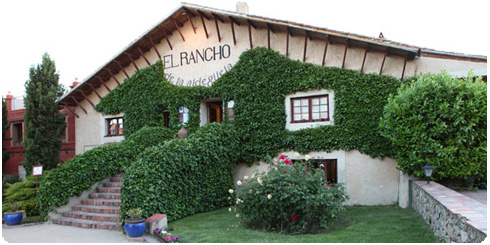
During these tough times many people aren’t thinking about spending money on a nice vacation. If you have the urge to travel but your budget is holding you back, then check out a unique volunteer program in Spain through Vaughn Systems.
A friend did this a few years back and had a wonderful experience.
Participants from all over the world exchange conversation with Spaniards and in return for their time and their input, have their full board and lodging covered by the program.
There is absolutely no catch. Vaughn Systems recruit people from all kinds of backgrounds (not English professors nor linguistic experts) to volunteer six days of their time to have conversations with Spanish professionals.
You pay for your flights to and from Madrid and any accommodation before and after the program. Vaughan Systems provides accommodation and three meals a day in any of the venues, transfers to and from the towns from Madrid and accident insurance during the course of the program.
Over 9,000 volunteers from all over the world have come to Spain to take part in this cultural holiday program: writers, doctors, social workers, backpackers, executives, musicians, students, etc… The variety is endless: participants from more than 12 different countries, between ages 18-80.

 had spent 15 years in the marketing arena, five of those years marketing my own work, so I knew about promotions and the need to promote my first post if I expected anyone to read it. My confidence was not low, it was non-existent, so I chose an inventive way to promote my work, while protecting my fragile ego in the process. I derived a pen-name, hence, thepublicblogger.
 I began searching for permanent employment, but continued to write and soon after published my second post, Rudyard and Michelle: A Literary Union forms a Century Apart. While the numbers were not nearly as impressive, the comments reaffirmed that the literary world was where I belonged. I continued to blog, even confirming – via the series BREATHE – rumors among close friends that thepublicblogger and Kendall F. Person were one in the same. Nearly one year, 30 posts, and 12 promotional videos later, I realized that investing more time into my blog, can only make me mentally stronger, more visible as an author, more determined as a writer and more knowledgeable about the world around me.







 The Bohemian Home Journal